Introduction
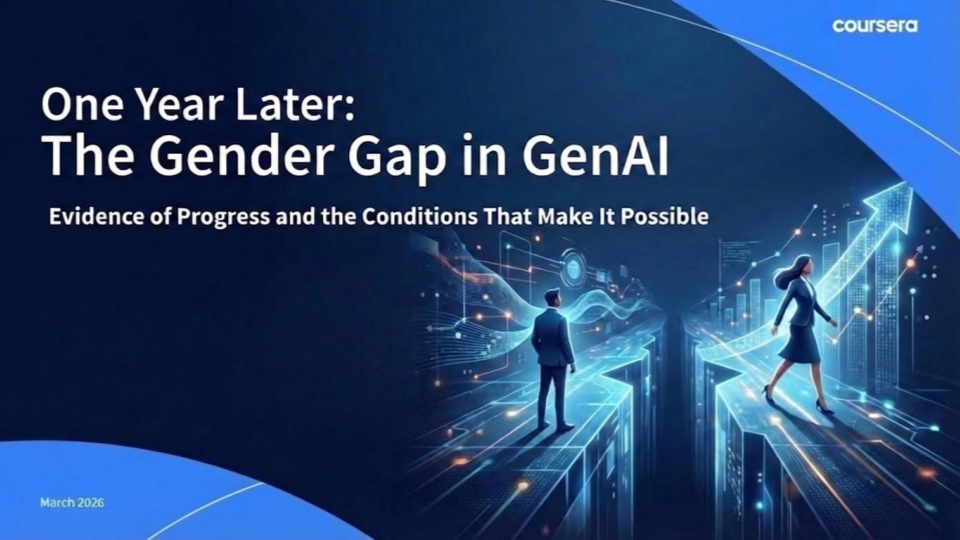
As International Women’s Day approaches, a new Coursera report reveals encouraging yet uneven progress in closing the gender gap for critical Generative AI (GenAI) skills. With GenAI predicted to add up to USD $22.3 trillion to the global economy by 2030 (IDC), ensuring women and men have equal access to these skills is essential for fair wealth distribution. This guide translates the report’s findings into actionable steps for educators, employers, and policymakers who want to accelerate women’s participation in GenAI learning.
What You Need
- Access to the Coursera Gender Gap in GenAI report (free online)
- Basic understanding of enrollment data and percentage point changes
- Interest in regional and local skill trends
- A willingness to implement targeted initiatives for women learners
- Optional: Coursera for Teams or enterprise account for internal benchmarking
Step-by-Step Guide
Step 1: Grasp the Current Global Gender Gap in GenAI Enrollments
Start by understanding the baseline. The report found that women’s share of all GenAI enrollments on Coursera rose from 32% in 2024 to 36% in 2025—a clear but modest improvement. For enterprise learners, the jump was more impressive: from 36% to 42% over the same period. This means women’s engagement is accelerating faster than men’s, even as overall participation grows. Use this data to set realistic targets for your organization or region. Key fact: the narrowing gap is real, but women still represent a minority.
Step 2: Analyze Regional Success Stories for Replicable Strategies
The report highlights significant regional differences. Latin American nations doubled their share of female GenAI enrollments year-over-year. Standouts include Peru (+14.5 percentage points), Mexico (+5.3 pp), and Colombia (+4.5 pp). In Asia Pacific, Uzbekistan leads with an 8.8 pp increase, while India (Coursera’s biggest GenAI market) gained 2.2 pp. Countries like Vietnam, Indonesia, Thailand, and the Philippines also improved. Action: Interview leaders from these countries to learn about their outreach—e.g., scholarships, women-only cohorts, or industry partnerships. Replicate what works locally.
Step 3: Identify and Address Declining Regions
While some regions progress, several English-speaking and economically developed countries are falling behind. The United States (-0.9 pp), Canada (-1.0 pp), United Kingdom (-1.8 pp), Spain (-1.1 pp), and Germany (-0.2 pp) all saw a smaller share of female enrollments in 2025 compared to 2024. Why? Possible reasons include larger male enrollment surges, lack of targeted campaigns, or cultural barriers. Step: Survey these countries’ educational and corporate stakeholders to identify obstacles. Then design interventions such as flexible learning schedules, mentorship programs, or highlighting female role models in GenAI.
Step 4: Focus on Enterprise Learners as a Leverage Point
Enterprise learners showed the fastest improvement: women now account for 42% of GenAI enrollments through workplace programs. This suggests that corporate training and employer-sponsored learning can effectively narrow the gap. Action: Encourage your organization to offer GenAI courses as part of professional development. Use internal communications to promote sign-ups, especially for women. Consider tying skill acquisition to promotions or project assignments.
Step 5: Tailor Outreach to Local Cultural and Economic Contexts
The report demonstrates that one-size-fits-all approaches don’t work. For instance, Peru’s 14.5 pp gain likely resulted from specific national initiatives, while Uzbekistan’s 8.8 pp leap shows the impact of government-led digital skills programs. Tips: Collaborate with local universities, NGOs, and women’s tech groups. Offer courses in local languages, provide scholarships, and create safe, supportive learning communities. Monitor enrollment data monthly to see what works.
Step 6: Measure and Communicate Progress Transparently
Data transparency drives accountability. The Coursera report itself is a one-year follow-up, and it shows that measuring progress works. Action: Publish your own gender enrollment data (anonymized) internally and externally. Celebrate successes like the enterprise 42% figure to motivate others. Use percentage point changes rather than raw numbers to show relative growth. Set quarterly targets and adjust strategies if some regions stagnate.
Tips for Success
- Start small: Pilot a focused program for women in GenAI in one region or department before scaling.
- Engage male allies: Encourage men to participate in inclusive training and advocate for female peers.
- Use role models: Feature successful female GenAI professionals in marketing materials and course introductions.
- Leverage free resources: Many GenAI courses on Coursera are available via audit—promote these as low-barrier entry points.
- Combine technical and soft skills: The report also mentions critical thinking; offer bundled learning paths that mix GenAI with human competencies.
- Monitor unintended consequences: Rapid growth in male enrollments can mask stagnation in female participation—always look at shares, not just totals.