The Vera C. Rubin Observatory, perched high in Chile's Atacama Desert, is poised to transform our understanding of the cosmos. Originally conceived as the Dark Matter Telescope in the mid-1990s, this revolutionary facility will scan the entire southern sky every few nights for a decade. Its unprecedented cadence and sensitivity will uncover everything from city-block-sized asteroids to fading supernova remnants and mysterious interstellar visitors. Below, we explore key questions about this ambitious project.
1. What is the Vera C. Rubin Observatory and why is it so anticipated?
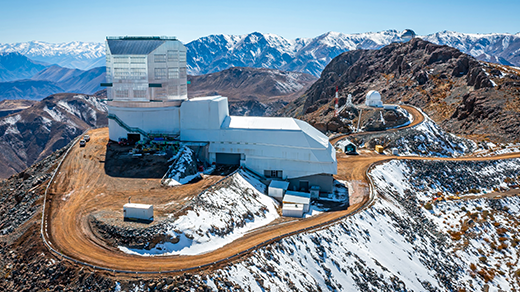
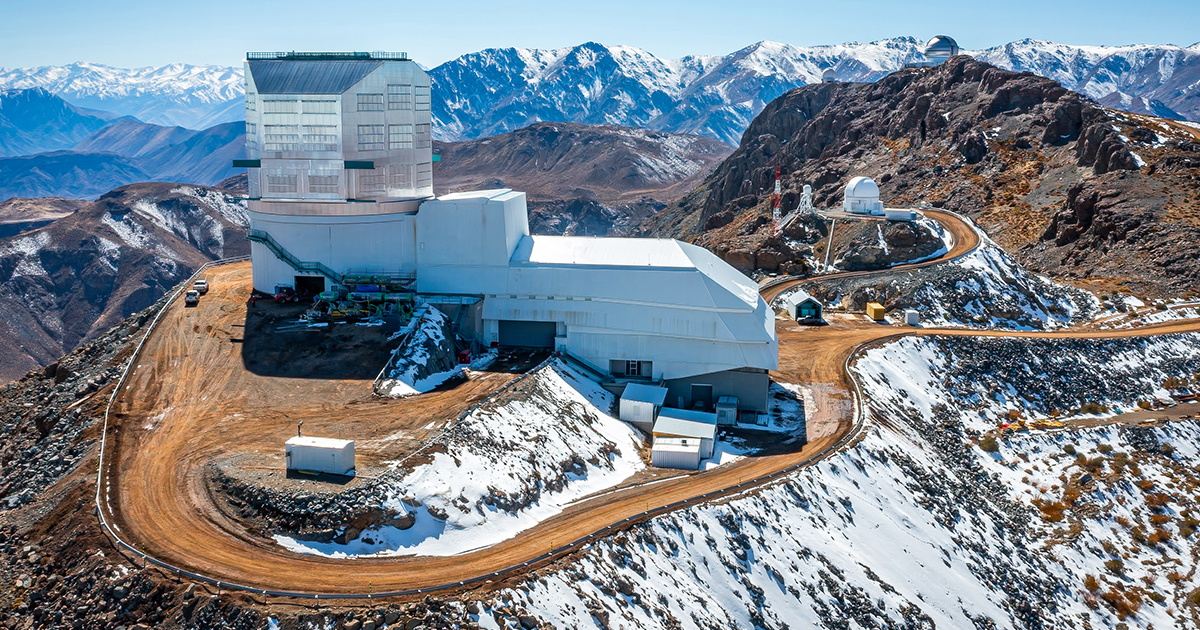
The Vera C. Rubin Observatory (formerly the Large Synoptic Survey Telescope, LSST) is a next-generation astronomical facility located at an elevation of 2,682 meters in Chile's Atacama Desert. Its primary mission is to conduct the Legacy Survey of Space and Time (LSST) – a 10-year, wide-field imaging project that will repeatedly photograph the entire visible southern sky. What makes Rubin unique is its combination of a 3.2-gigapixel camera, an 8.4-meter mirror, and a rapid observing cadence. Where past surveys might revisit a patch of sky monthly, Rubin will return every few nights, capturing celestial objects as they move, brighten, or fade. This design allows it to detect transient events like supernovae, track near-Earth asteroids, and even spot interstellar objects zipping through our solar system. The anticipation stems from its promise to generate an unparalleled dataset – an estimated 20 terabytes of data per night – that will fuel discoveries across virtually every branch of astronomy.
2. How does Rubin track skyscraper-size asteroids?
Rubin's survey strategy is perfectly tailored to find and monitor asteroids, including those large enough to cause regional devastation – think skyscraper-sized rocks (100–500 meters across). By imaging the same patch of sky every few nights, the observatory can detect moving objects against the background of fixed stars. Its 3.2-gigapixel camera captures such wide fields (about 40 times the area of the full moon) that it will cover the entire visible sky every three to four nights. Over 10 years, this creates a time-lapse movie of the solar system. Computer algorithms then identify objects that shift position between frames, distinguishing asteroids from stars. Rubin is expected to discover millions of new asteroids, including many in the main belt and near-Earth population. Crucially, it will find the vast majority of potentially hazardous asteroids larger than 140 meters, fulfilling a congressional mandate and helping planetary defense efforts. The data will also refine orbits, allowing predictions of close approaches decades in advance.
3. What are "failed supernovas" and how will Rubin study them?
Failed supernovas are massive stars that collapse directly into a black hole without the usual brilliant explosion. These events are extraordinarily rare and hard to detect because they produce little light – often just a brief, faint flash followed by sudden disappearance. Rubin's unique rapid-cadence survey will change this. Imagine a star that was visible one night, but in the next image (taken just a few days later) it has vanished, leaving no supernova remnant. That sudden vanishing act is the signature of a failed supernova. Rubin's ability to monitor hundreds of millions of stars repeatedly over years means it can catch these subtle disappearances. Scientists expect to discover dozens of such events per year, compared to the handful we know of today. This will reveal the final fates of very massive stars, test models of black hole formation, and clarify how heavy elements are distributed in galaxies. By observing the subtle dimming or disappearance instead of a bright explosion, Rubin opens a new window onto stellar death.
4. How will Rubin detect and study interstellar visitors?
Interstellar visitors like 'Oumuamua and Borisov are comets or asteroids that originate from outside our solar system. Rubin's continuous monitoring makes it ideal for catching these fast-moving objects as they enter our solar system's inner region. Because they can come from any direction and often travel at high speeds, discovering them requires repeatedly sweeping large areas of sky – exactly what Rubin does every few nights. When an interstellar object is spotted, its trajectory appears as a streak in multiple images; follow-up telescopes then refine the orbit and study its composition. Rubin is expected to find one or more interstellar visitors per year, vastly increasing the number of known samples. This will allow astronomers to compare the physical properties (size, color, reflectivity) of interstellar objects with those from our own solar system, revealing clues about the formation of planetary systems elsewhere in the galaxy. The data will also help in planning potential space missions to intercept and rendezvous with future visitors.
5. How does Rubin's 10-year survey differ from previous sky surveys?
Previous wide-area surveys like the Palomar Sky Survey or the Two Micron All Sky Survey (2MASS) provided static snapshots of the sky, often covering it once. Others, like Pan-STARRS, surveyed repeatedly but with less frequency or over a narrower area. Rubin breaks this paradigm by combining broad coverage (the entire visible southern sky) with repeated visits every three to four nights for a full decade. This creates a deep, time-domain dataset that no survey has achieved. The result is a dynamic movie of the universe: stars that undergo outbursts, asteroids that move, galaxies that host supernovae, and even microlensing events. Furthermore, Rubin's camera is extremely sensitive, reaching magnitudes fainter than 24.5 in single exposures, and stacking multiple images will go even deeper. The data volume – about 5 petabytes per year – is unprecedented. This 10-year legacy will serve as a foundational resource for centuries of future research, much like the Hubble Deep Field but for time-variable phenomena across the entire southern sky.
6. What is the connection between Rubin and dark matter?
The observatory was originally named the Dark Matter Telescope because one of its key science goals is to map the distribution of dark matter across the cosmos. Rubin will achieve this through weak gravitational lensing – the subtle bending of light from distant galaxies by the gravitational pull of dark matter along the line of sight. By precisely measuring the shapes of billions of galaxies over years, Rubin can create a 3D map of how dark matter is clumped, which then tests models of cosmic structure formation. Additionally, Rubin will study how dark matter influences galaxy clustering and how it behaves on small scales. While the name has changed to honor astronomer Vera Rubin (who first inferred dark matter from galaxy rotation curves), the dark matter science remains central. Combining the lensing data with Rubin's own supernova observations will also help constrain dark energy, the mysterious force accelerating the universe's expansion. Thus, the observatory is a powerful tool for exploring the invisible universe, from asteroids in our backyard to the largest structures in the cosmos.
Explore more: Learn about Rubin's observing strategy | Discover interstellar visitor detection