Introduction: A New Resupply Mission Blasts Off
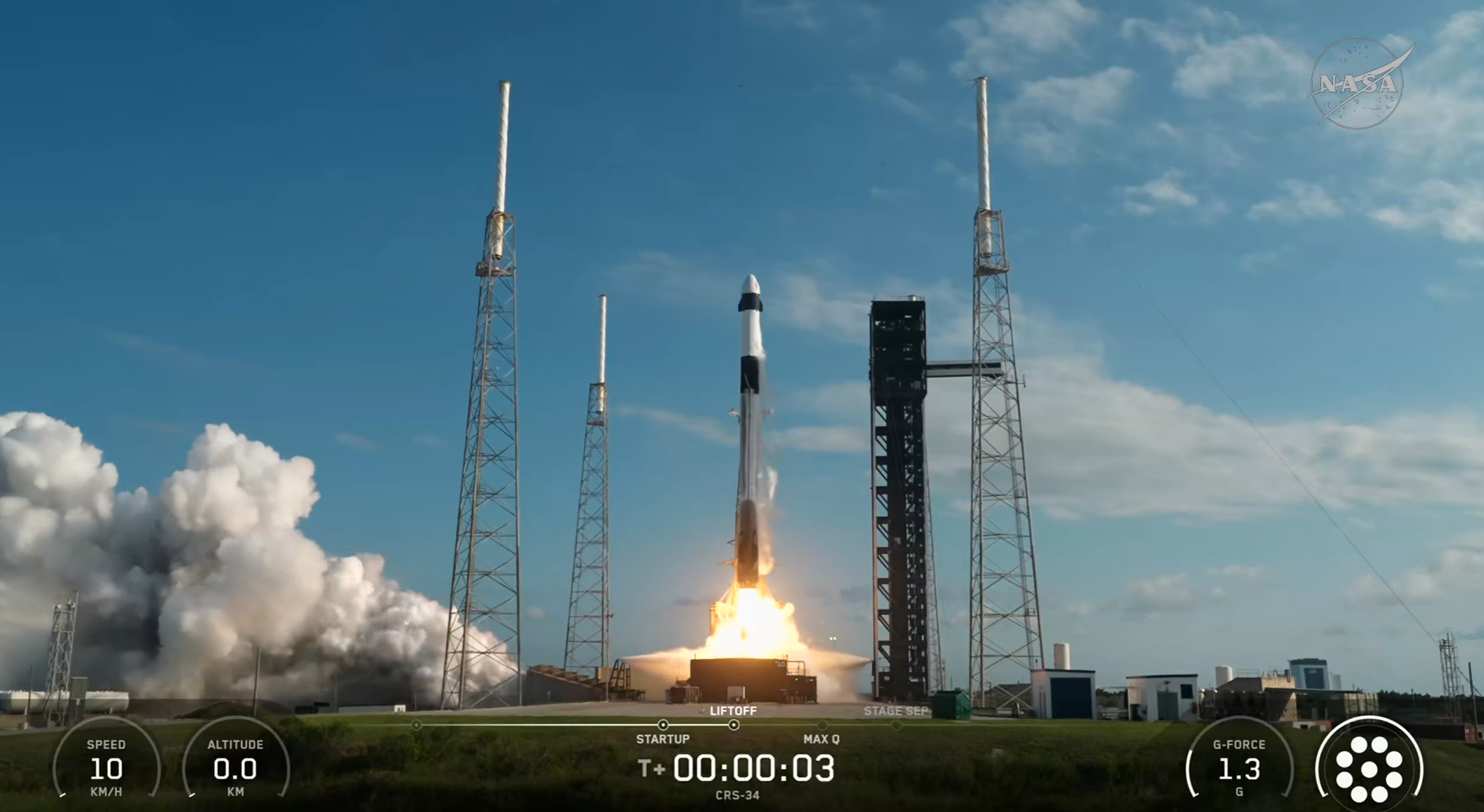
On Friday, May 15, 2026, at 6:05 p.m. EDT, a SpaceX Falcon 9 rocket carrying the Dragon cargo spacecraft lifted off from Space Launch Complex 40 at Cape Canaveral Space Force Station in Florida. This marks the 34th commercial resupply mission (CRS-34) under NASA’s contract with SpaceX, destined for the International Space Station (ISS). With nearly 6,500 pounds of cargo, the mission supports the Expedition 74 crew and delivers a suite of novel scientific experiments.
Launch and Autonomous Docking
The Falcon 9 performed flawlessly, sending Dragon into orbit. After a two-day journey, the spacecraft is scheduled to autonomously dock to the forward port of the station’s Harmony module around 7 a.m. EDT on Sunday, May 17. NASA will provide live coverage of the rendezvous and docking starting at 5:30 a.m. EDT on NASA+, Amazon Prime, and the agency’s YouTube channel. Viewers can also follow via social media platforms.
Dragon’s Cargo Manifest
In addition to essential supplies for the ISS crew, Dragon carries experiments that promise to advance knowledge in biology, physics, and Earth science. Key payloads include:
- Microgravity Simulator Validation – A project to assess how well Earth-based simulators replicate the unique environment of space, which is crucial for future experiment preparation.
- Wood-Based Bone Scaffold – A novel scaffold derived from wood that could lead to new treatments for osteoporosis and other fragile bone conditions, leveraging microgravity for enhanced tissue engineering.
- Red Blood Cell & Spleen Study – Equipment to investigate how red blood cells and the spleen adapt to space, shedding light on anemia and immune function in astronauts.
- Charged Particle Monitor – A new instrument to track charged particles around Earth that can disrupt power grids and satellites, improving space weather forecasting.
- Planet Formation Investigation – An experiment that could provide fundamental insights into how planets form, using microgravity to simulate early solar system conditions.
- Earth & Moon Reflectance Instrument – A high-accuracy device for measuring sunlight reflected by Earth and the Moon, aiding climate studies and lunar exploration.
Science at the Station: Over 25 Years of Discovery
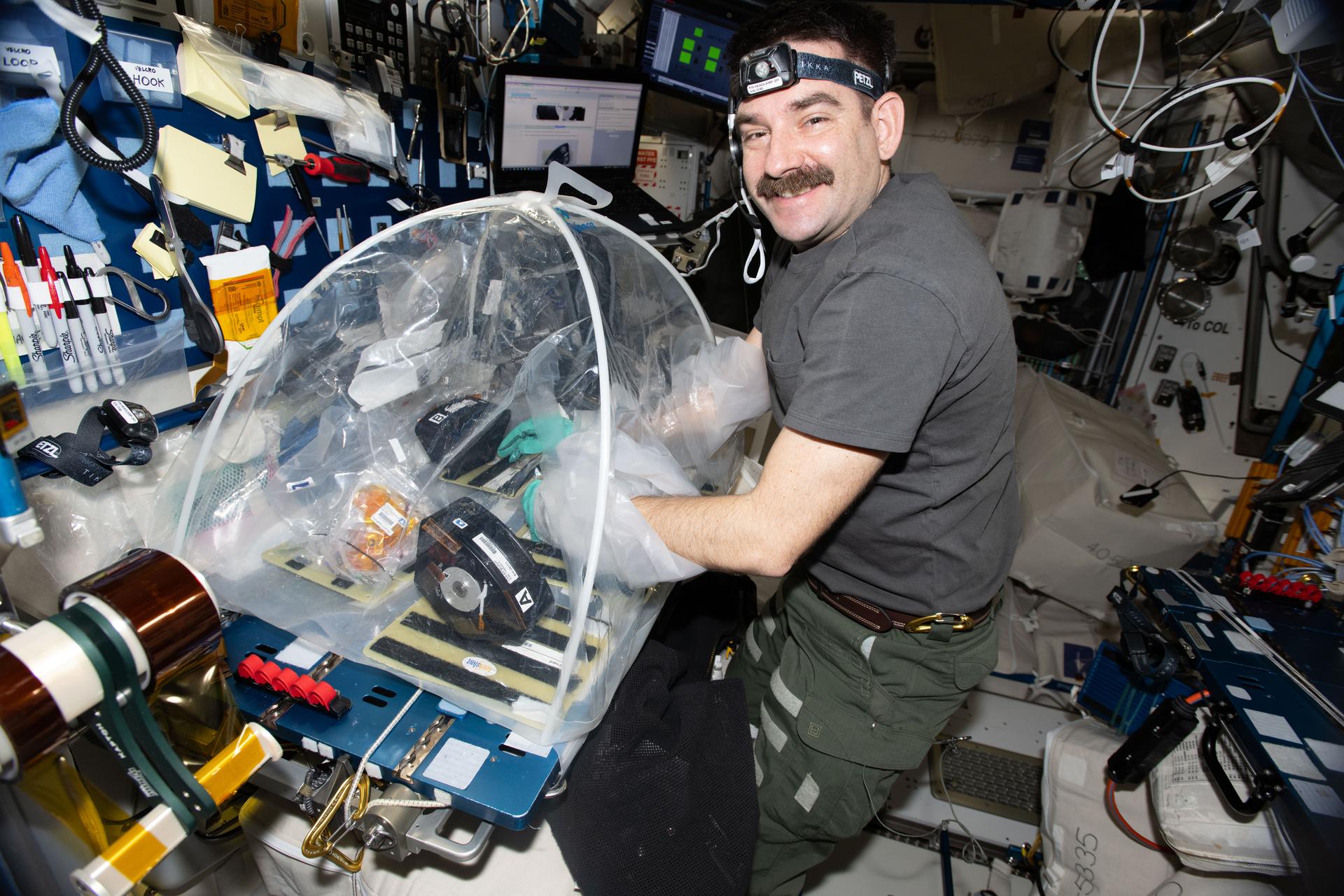
These experiments are a small part of the hundreds of investigations conducted aboard the ISS in biology, biotechnology, physical sciences, and Earth/space science. For more than a quarter-century, astronauts have lived and worked continuously in the orbiting laboratory, achieving breakthroughs impossible on Earth. The station helps NASA understand human spaceflight challenges, expand commercial opportunities in low Earth orbit, and lay the groundwork for future Artemis missions to the Moon and eventual trips to Mars.
Dragon’s Stay and Return
The Dragon spacecraft is scheduled to remain attached to the station until mid-June. It will then depart, carrying time-sensitive research and cargo, and splash down off the coast of California. This return allows scientists to analyze samples and data quickly after their exposure to microgravity.
More Information
For additional details on International Space Station research, operations, and crew missions, visit the official NASA station page: https://www.nasa.gov/station.
Media Contacts:
Jimi Russell, NASA Headquarters – 202-358-1100, james.j.russell@nasa.gov
Danielle Sempsrott / Leejay Lockhart, Kennedy Space Center – 321-867-2468
Sandra Jones / Joseph Zakrzewski, Johnson Space Center – 281-483-5111