Breaking: New Recommended Approach for Enterprise Secret Management on Kubernetes
In a move that redefines how platform teams handle sensitive data, HashiCorp and Red Hat have jointly endorsed the Vault Secrets Operator (VSO) as the primary method for automating secret lifecycle management in Kubernetes and OpenShift environments. The announcement, made during a technical briefing, marks a shift away from older integration patterns like the Vault Agent Sidecar Injector.
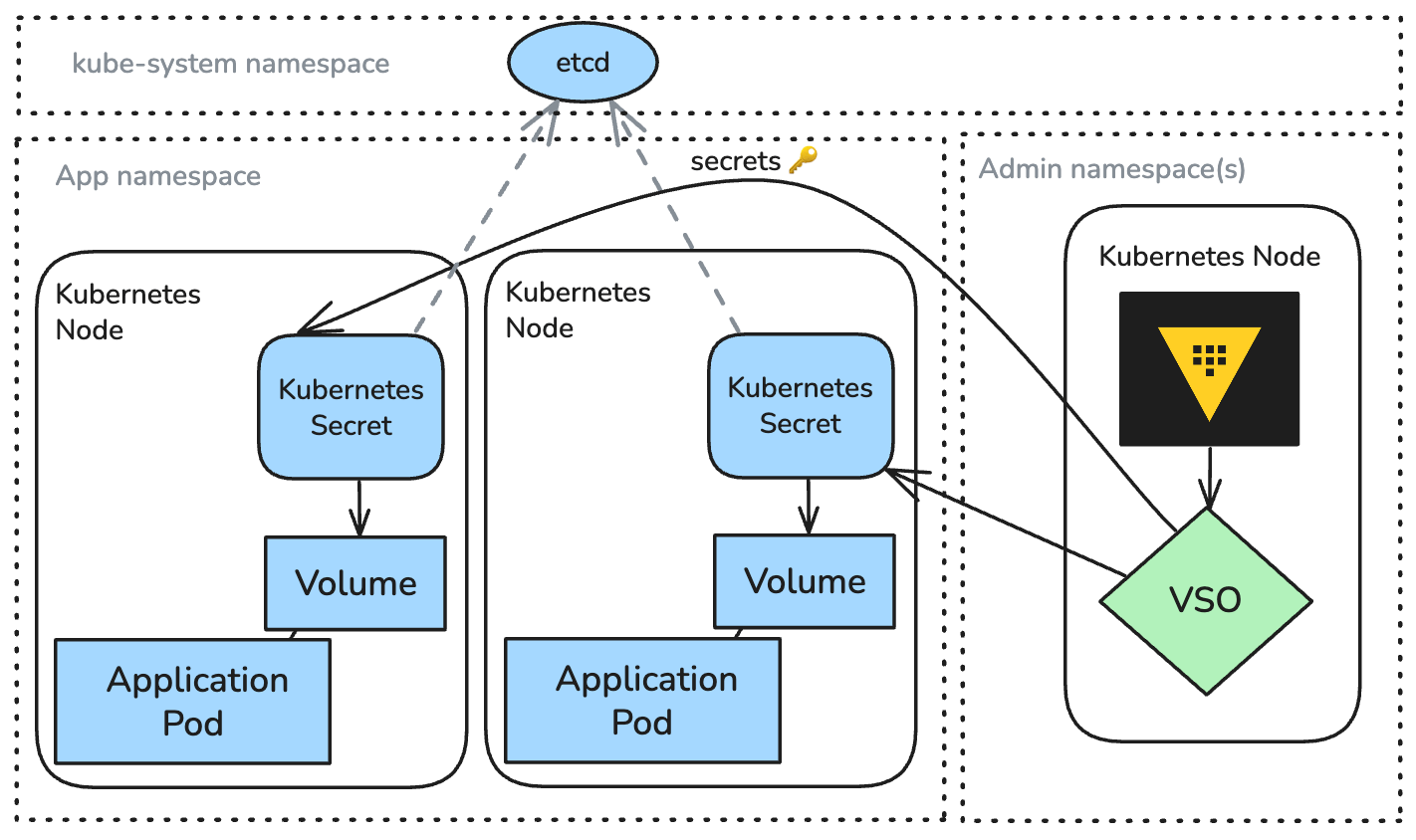
"VSO is now the recommended standard for most organizations and use cases," said a HashiCorp spokesperson. "It delivers a Kubernetes-native approach that doesn't change how pods already interact with secrets, while providing robust lifecycle automation."
The decision comes as enterprises increasingly struggle to scale secret governance across multiple clusters and clouds without slowing development. Native Kubernetes Secrets lack the enterprise-grade features needed for lifecycle management, forcing teams to seek external solutions.
Background
Kubernetes offers native Secrets, but they are not designed to meet enterprise governance needs. As environments grow, the challenge shifts from injecting a secret into a pod to managing generation, rotation, and revocation without developer friction.
Multiple integration patterns have emerged over the years, including the Vault Agent Sidecar Injector, Secrets Store CSI Driver, and third-party operators. Each carries distinct operational and security tradeoffs, often overwhelming platform teams.
The Vault Secrets Operator was developed in partnership between HashiCorp and Red Hat, leveraging their deepened collaboration through IBM. It is designed to standardize secret delivery and lifecycle automation in a way that is both secure and developer-friendly.
Key Advantages of VSO
- Kubernetes-native: Runs as an operator, aligning with Kubernetes operational patterns.
- Lifecycle management: Automates secret generation, rotation, and revocation.
- No application changes: Pods continue to access secrets via standard methods like volumes or environment variables.
- Centralized governance: Works with Vault as the single source of truth for secrets across hybrid clouds.
What This Means
For platform teams, VSO simplifies the complex task of managing secrets at scale. "The question used to be 'how do I get a secret into my pod?' Now it's about the entire lifecycle," explained a Red Hat expert. "VSO provides a unified answer without slowing down development."
The operator protects against common pitfalls like stale secrets or uncontrolled access, critical for compliance in regulated industries. It also reduces the operational burden of maintaining multiple integration methods.
With VSO, enterprises can enhance native Kubernetes Secrets or replace them entirely, relying on Vault for robust security. This is particularly important as most secrets are also used outside Kubernetes, requiring a platform-agnostic solution.
Industry Reaction
Early adopters have reported faster deployment cycles and improved security posture. "We've switched from the sidecar injector to VSO and saw immediate benefits in uptime and auditability," said a platform engineer at a financial services firm.
The HashiCorp-Red Hat partnership, strengthened by IBM's acquisition of both companies, ensures deep integration with OpenShift. Users can expect enhanced support and consistent updates.
Next Steps
Organizations currently using older patterns are encouraged to evaluate VSO for new deployments. HashiCorp provides migration guides and documentation to transition existing workloads.
For teams still evaluating options, the VSO approach is highlighted as the most future-proof. "The industry is moving toward operator-based management," concluded the HashiCorp spokesperson. "VSO is the standard we recommend."